
Nordic study examines seafood’s climate hotspots
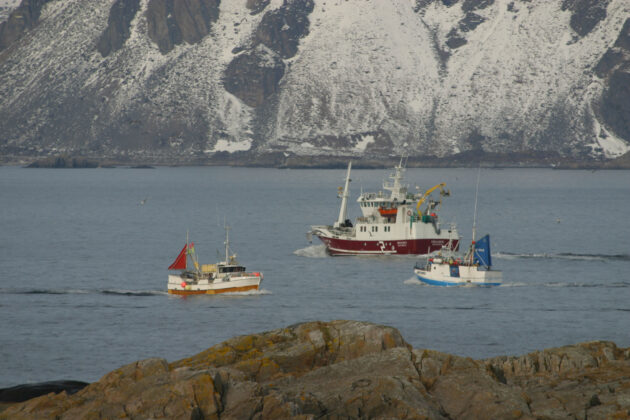
The climate footprint of Nordic seafood production varies widely across countries, species, fishing methods, and production systems. A new report published by the Nordic Council of Ministers shows that climate action must focus on the most emission-intensive parts of the seafood sector.
Main findings
- A new Nordic report maps greenhouse gas emissions from the seafood sector in five countries, as well as the Faroe Islands and Greenland.
- The report does not identify any single type of seafood as consistently having the largest climate footprint. Emissions depend on how seafood is caught, farmed, processed and transported.
- Fuel use is the main source of emissions in fisheries, while feed dominates in aquaculture.
- The researchers argue that climate action should target the most emissions-intensive parts of the sector, rather than seafood as a single product category.
- The report aims to inform climate policy and action within the sector, but differences in the underlying data make direct comparisons between countries uncertain.
Fuel use is by far the main source of emissions in capture fisheries, while feed accounts for the largest share of emissions from aquaculture.
“The report shows that seafood cannot be treated as one uniform product category,” says Bente Torstensen, CEO of Nofima.
The climate footprint depends on how the seafood is caught
The study covers the seafood sectors of the five Nordic countries, as well as the two self-governing territories of the Faroe Islands and Greenland. It was carried out under the auspices of the Nordic Council of Ministers and prepared by researchers from Nordic research and university institutions.
“The report does not identify one particular type of seafood as a general climate problem. Instead, it shows that emissions can be high in fuel-intensive fisheries, energy-intensive processing, and aquaculture systems where feed production or electricity use generate substantial emissions. The key finding is that the climate footprint depends on how seafood is caught, farmed, processed and transported. This means that measures must target the most emission-intensive parts of the value chain,” Torstensen says.
At the same time, many Nordic seafood products have a lower climate footprint per kilogram of edible product than animal-based foods from agriculture, particularly meat from ruminant animals.
Where do emissions arise?
The study makes it possible to identify the main drivers of emissions across different parts of the sector:
- Capture fisheries: Fuel use is normally the dominant factor. Emissions depend on fishing gear, vessel type, fishing grounds, stock abundance, steaming distance and the level of activity required to land each kilogram of catch.
- Aquaculture: From a life-cycle perspective, feed production and feed composition are generally the most important sources of emissions. Direct energy use depends on the technology and electricity mix and can be particularly significant in land-based recirculating aquaculture systems.
- Processing: The climate impact depends, among other things, on the electricity mix, chilling and freezing requirements, whether processing takes place on board or on land, and whether processes such as fishmeal processes rely on fossil fuels.
- Transport: The importance of transport varies greatly by product form and mode of transport. Shipping generally has lower emissions per tonne than air freight, while air cargo fresh fish can substantially increase its climate footprint.
Findings from the countries
- Denmark: Emissions from fisheries are largely driven by diesel use. Aquaculture emissions fell by 29% to 63,000 tonnes of CO₂-equivalents in 2023, mainly due to improved feed efficiency and cleaner electricity. A CO₂ tax on fisheries is planned from 2029.
- Faroe Islands: Fisheries, processing and salmon farming are closely integrated. Capture fisheries are the largest single source of territorial emissions, estimated at 260,000–290,000 tonnes of CO₂ annually. Feed dominates the life-cycle emissions of farmed salmon, while air freight increases the climate footprint.
- Finland: Emissions are shaped by energy use in fishing and feed use in aquaculture. Rainbow trout is particularly important in freshwater farming, and improved feed efficiency and low-emission energy are key measures.
- Greenland: Offshore trawlers and processing based on fossil energy generate high emissions. Processing emissions depend heavily on whether facilities have access to hydropower or rely on fossil fuels. Centralising processing could reduce emissions but may come at the expense of jobs and value creation in coastal communities.
- Iceland: Emissions vary with pelagic fisheries and steaming distances. Fisheries, aquaculture, and seafood processing emitted 692,000 tonnes of CO₂-equivalents in 2023. Fuel combustion in fishing dominates but fishmeal production and energy use in processing are important sources, while a rapidly expanding aquaculture sector makes feed increasingly important.
- Norway: Feed is the largest source of emissions in salmon farming, while fuel is the main challenge in the fishing fleet. There are, however, major differences between vessel groups, gear types, and fisheries. Renewable electricity offers opportunities for lower emissions from processing, but emissions from feed, maritime operations, and the fleet still require targeted action.
- Sweden: Fuel dominates emissions from fisheries, while feed and energy are central sources in aquaculture. A relatively low-emission electricity system is an advantage, but the climate footprint still varies greatly between species and production systems.
Scientific method
The report analyzes greenhouse gas emissions from Nordic aquatic food production. It combines national emissions and production data, sector statistics, company and accounting data where available, scientific literature, and existing life-cycle assessment (LCA) studies. The data mainly relates to 2023.
The analyses cover all or parts of the seafood value chain: Capture fisheries, aquaculture, processing and manufacturing, transport and selected downstream activities
The findings are brought together in a joint Nordic chapter that highlights both common patterns and structural differences between countries. The aim is not only to estimate emissions, but also to explain where they arise and why they vary between species, production systems, vessel types, and energy systems.
- The report draws on several sources of evidence:
- National statistics on landings, aquaculture production, processing, energy use, and greenhouse gas emissions
- Vessel and accounting data, including fuel consumption, catch volumes, vessel size, and economic indicators
- Public emissions inventories, industry statistics, and, where relevant, company data
- Scientific life-cycle studies and peer-reviewed literature on emissions from fishing, feed, energy use, processing, and logisticsRoom for body text, subheadings, images, and other things.
Facts about the research
About the report
The report brings together analyses from Denmark, the Faroe Islands, Finland, Greenland, Iceland, Norway and Sweden. It is designed to provide an evidence base for policy development, further research, and climate action in the Nordic seafood sector.
The study was published as a TemaNord report under the Nordic Council of Ministers. It was prepared by researchers from Nordic research and university institutions, drawing on national statistics, previous research, and, for some countries, data contributed by relevant stakeholders.
The author group represents:
- Nofima, Norway
- University of Copenhagen, Denmark
- University of Iceland
- University of the Faroe Islands
- Lund University, Sweden
- Natural Resources Institute Finland (Luke)
Research Report
Contacts


Topics
Climate change