
Male or female cod? Scientists hope to determine sex using imaging technologies
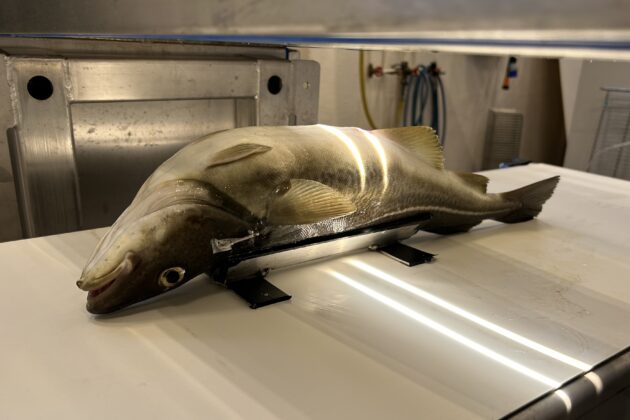
In aquaculture, it is important to know the sex of broodstock and production as early as possible. Using advanced imaging techniques, scientists at Nofima explored whether it is possible to identify the sex of farmed cod when the fish is still young. Although the methods tested show promise, they are not yet ready for use in commercial fish farming.
Main findings
- Several analytical approaches were applied to the hyperspectral images, but no clear and consistent differences between males and females were identified. This indicates that any sex‑related differences captured in the images are currently too subtle to allow direct and reliable use of these methods.
- To better understand where such subtle spectral differences might originate, the researchers focused on examining measurements taken directly from the gonads. By examining spectra obtained directly from the gonads, the researchers could clearly distinguish between females and males using LDA – Linear Discriminant Analysis – a statistical method used in machine learning to classify data into several categories.
- When applied to images of whole fish, the model based on gonad spectra successfully captured sex‑related information and showed more consistent performance across trials and fish sizes than the other methods tested.
Nofima researchers are using a modern imaging method called hyperspectral imaging – based on spectroscopy – to scan the fish and investigate possible sex-related signal that allows to determine its sex as early as possible in the fish’s life cycle. Spectroscopy works by analyzing how light interacts with biological tissue, allowing scientists to detect intrinsic differences without harming the fish.
“Determining sex at early and intermediate growth stages is important for what we call selective breeding. Earlier and more accurate sex identification can provide better broodstock management, more efficient breeding and improved production planning, thereby reduce resource use and contribute to increased sustainability in cod farming,” says scientist Samuel Ortega at Nofima.
He has led the work in the CodSex project in close collaboration with Vesterålen Havbruk and Kime Akva, where the aim was to distinguish male and female fish in cod farming using hyperspectral imaging. The work is funded by FHF – the Norwegian Seafood Research Fund.
Imaging technologies in food processing
The development and use of modern imaging technology to “see” inside food products at speeds comparable to conveyor belts used in industrial production, and without affecting or harming the product in any way, has accelerated greatly in recent years. In technical terms, these are called non‑invasive methods. Today, spectroscopy is used to determine melanin and blood spots in salmon and fat content in fish such as salmon, mackerel and herring. The method can be used to detect defects in fish fillets, assess water content in stockfish and dried and salted cod, meat content in crab legs and quality in chicken fillets, to name a few. New areas of use are constantly being developed and adopted in commercial settings.
But can the method be used to determine the sex of young, small fish in cod farming?
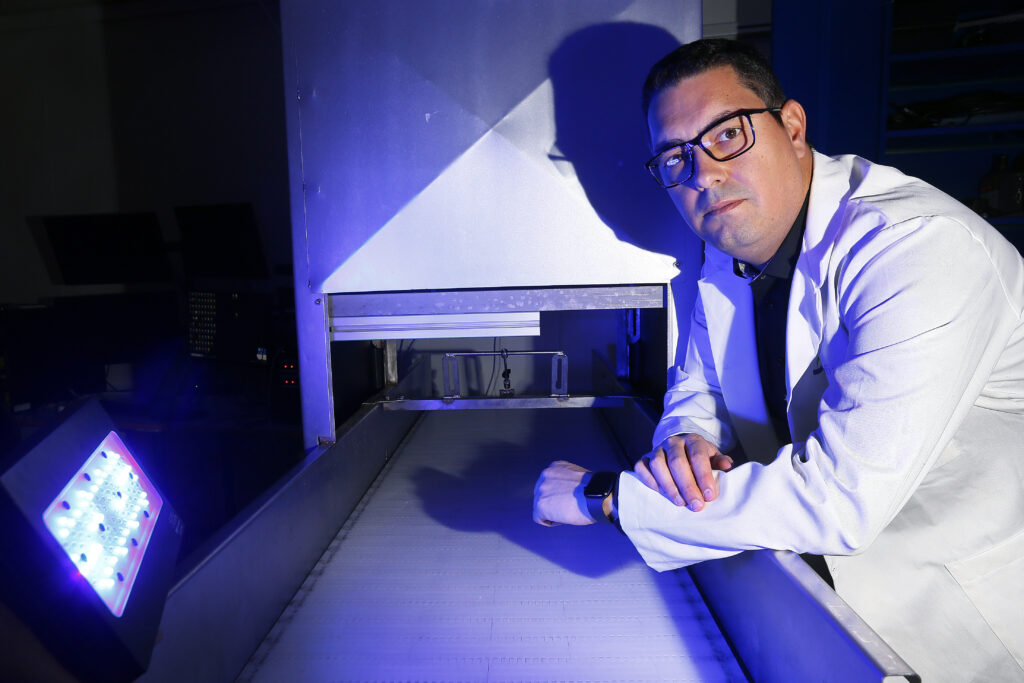
“Developments in imaging technologies provide possible alternatives for sex determination. Hyperspectral imaging is a type of ‘advanced camera’ that can see details in tissue that we cannot see with the naked eye. The method also enables high throughput – in other words, many fish can be examined just as quickly as they pass by on a conveyor belt,” explains Samuel Ortega.
The focus of the project was to investigate whether the technology developed in the Maritech Eye hardware platform can be used to determine the sex of Atlantic cod in a way that works in standard industrial production.
Promising results
The fish’s reproductive organs are called gonads. Today, methods such as dissection – that is, cutting into the dead fish to see the gonads – or ultrasound are used, but these are difficult to apply with sufficient precision in young fish that have not yet reached sexual maturity.
“Something that limits their use in commercial settings,” points out Samuel Ortega.
Even though hyperspectral imaging was the main focus, other imaging‑based technologies were also assessed. In the CodSex project, both a method called fluorescence‑based hyperspectral imaging and standard colour images were tested. The results are interesting, but none of the methods tested are anywhere near fully developed yet.
“Unfortunately, none of the techniques investigated currently provide a robust solution for early and non‑invasive sex determination in Atlantic cod under industrial conditions,” concludes Ortega.
According to the researcher, analyses based on hyperspectral images show promise for identifying the sex of cod, but only once the fish have well‑developed gonads. This means the method is not suitable for sorting juvenile fish in an industrial setting.
“Additionally, although fluorescence imaging and conventional imaging did not produce reliable results in this study, these approaches may still hold greater potential for future improvements in image‑based sex identification”, says Samuel Ortega.
Scientific method
Four trials were carried out using imaging-based methods on cod of different sizes and developmental stages. Numerous intact cod (dead) varying in size, were imaged by use of different modalities. Following, the same cod were dissected for gonad referencing for respective image analysis. Together, these trials provided a solid basis for assessing whether such technologies can be used to determine sex in cod. The hyperspectral data were collected using the Maritech Eye system.
- Trial 1: A total of 188 small fish from Vesterålen Havbruk were examined. None had visibly developed gonads. Hyperspectral images were taken from the ventral side and lateral the side. Ultrasound did not work on such small individuals and sex was therefore determined by dissection, which was also challenging because the gonads were very small.
- Trial 2: A total of 136 larger fish from Kime Akva were analysed. Hyperspectral images were collected, but some fish were affected by damage or transport. Ultrasound showed low accuracy (around 40 percent) and was deemed unreliable. Sex was therefore determined by dissection.
- Trial 3: A total of 30 fish from Nofima’s cod breeding program were included in a smaller, more detailed trial. In addition to hyperspectral images, fluorescence images were taken, which show light emitted from tissue after illumination and can highlight differences between tissue types. Measurements were also made directly on the gonads. Sex was determined by dissection.
- Trial 4: A total of 998 fish from Nofima’s cod breeding program were examined. All were photographed using standard RGB images (standard colour images based on red, green and blue light), and a subset also had hyperspectral images taken of the ventral side. Sex was determined by dissection.
The method based on exploiting spectral information from the gonads showed promising results in the experiments involving larger, more mature fish, but not in the initial tests on smaller cod (trial 1), where the gonads were not yet developed.
Facts about the research
- The work in the CodSex project has been carried out in close collaboration with Vesterålen Havbruk and Kime Akva.
- The project is funded by FHF – the Norwegian Seafood Research Fund.
Read Nofima’s research report:
Contacts


Topics
Spectroscopy