
Fatty acid from herring may ease mild psoriasis
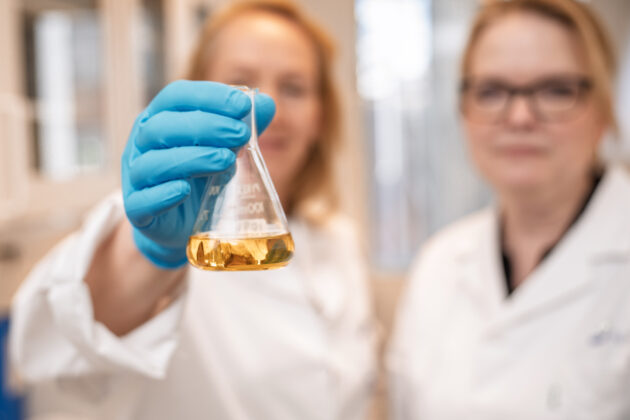
Laboratory tests on skin cells suggest that the fatty acid omega‑11 can dampen inflammation linked to psoriasis.
Short summary
- Omega-11 reduces inflammation in skin cells: Experiments in cell models show that the fatty acid omega-11, or cetoleic acid, reduces signalling molecules that trigger psoriasis and calms early inflammation in skin cells.
- Combination with omega-3 works best: Omega-11 acts early in the disease process, while the omega-3 fatty acids EPA and DHA act later. Together, they may provide a more comprehensive positive effect against psoriasis. The research is still in an early phase and has not been tested in humans.
- Fish such as herring and mackerel are important sources: Pelagic fish species from the North Atlantic contain a lot of omega-11. This creates potential both for better public health and greater value in the seafood industry.
The results are promising, but the research has so far only been carried out in cells grown in the lab and not yet tested in people with psoriasis.
Psoriasis is a chronic inflammatory skin disease that causes red, scaly patches on the body. Fatty fish is now being explored as a possible way to help people with mild psoriasis. Substances in fatty fish have shown very positive effects in these laboratory studies.
“Our lab studies show a clearly positive effect. The next step will be to investigate whether these findings also apply to people with mild to moderate psoriasis. We look forward to exploring this further and hopefully collaborating with medical research groups in the field,” says Tone‑Kari Østbye.
Fish oil is more than omega‑3
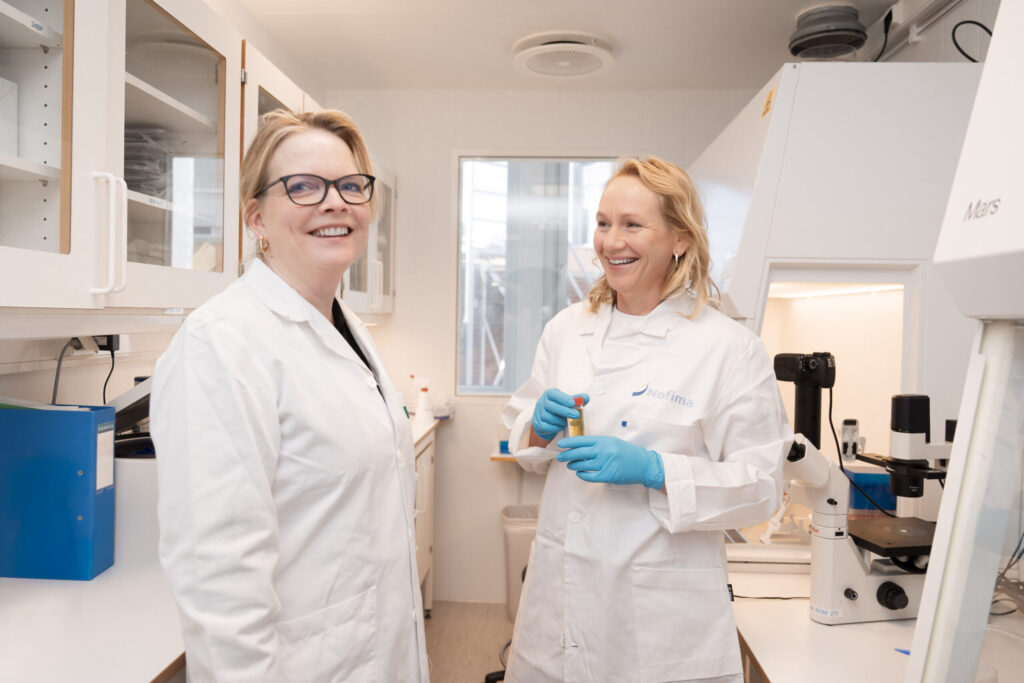
Østbye is a senior scientist at the research institute Nofima and has many years of experience studying fat and fatty acid metabolism in fish. In recent years, she has become particularly interested in omega‑11, also called cetoleic acid.
This fatty acid is found in high amounts in fatty North Atlantic fish species such as herring, capelin and mackerel, pelagic fish that live in the waters just off the Norwegian coast.
A few years ago, Østbye and colleagues discovered that omega‑11 stimulates our cells to convert short omega‑3 fatty acids into the beneficial long‑chain marine omega‑3 fatty acids EPA and DHA. EPA and DHA are important for skin health, but the researchers did not yet know whether the same applied to omega‑11 itself.
“So we wanted to investigate whether omega‑11 could benefit the skin indirectly through omega‑3, but also whether it might have a direct effect on its own,” Østbye explains.
Why focus on psoriasis?
“We have worked with this omega‑11 fatty acid for many years. In addition, we have just developed a model for psoriasis, where we have studied how herring oil can influence the disease. We therefore wanted to connect our knowledge about omega‑11 with psoriasis,” says Østbye.
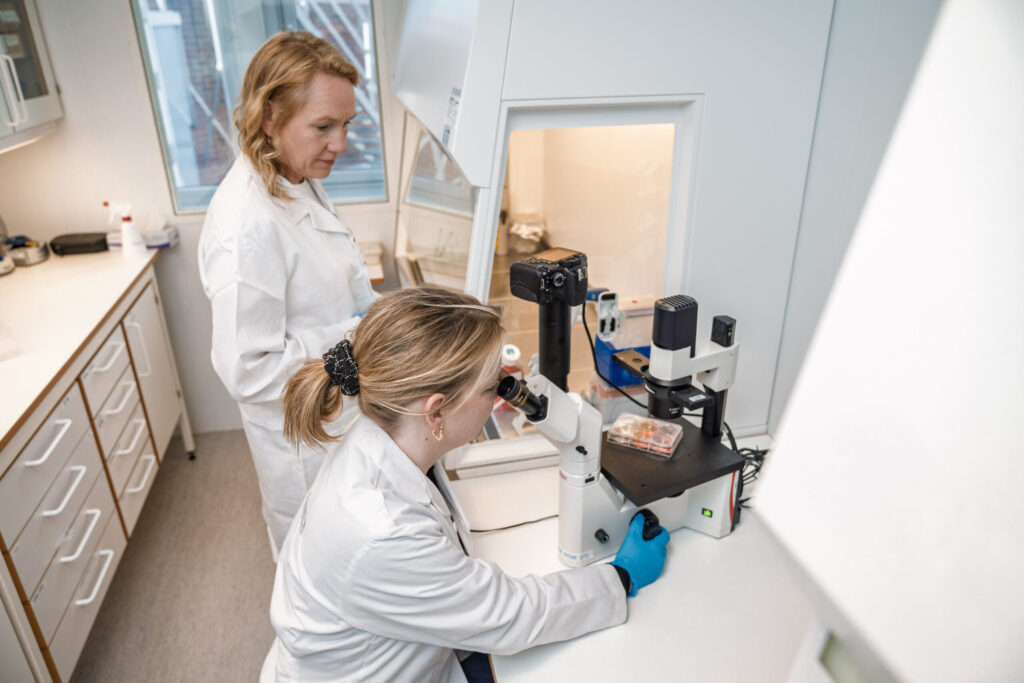
Her colleague Mona Pedersen has extensive expertise in skin and has developed robust models for studying psoriasis.
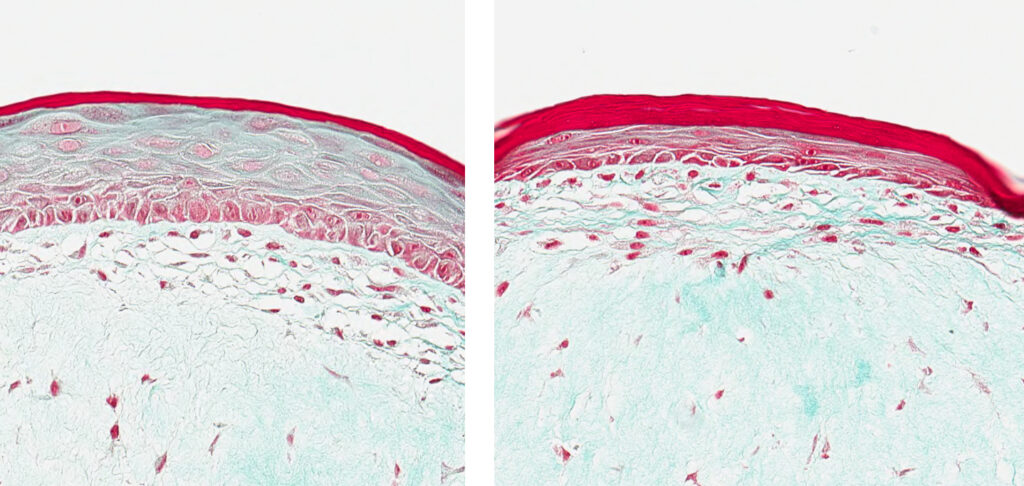
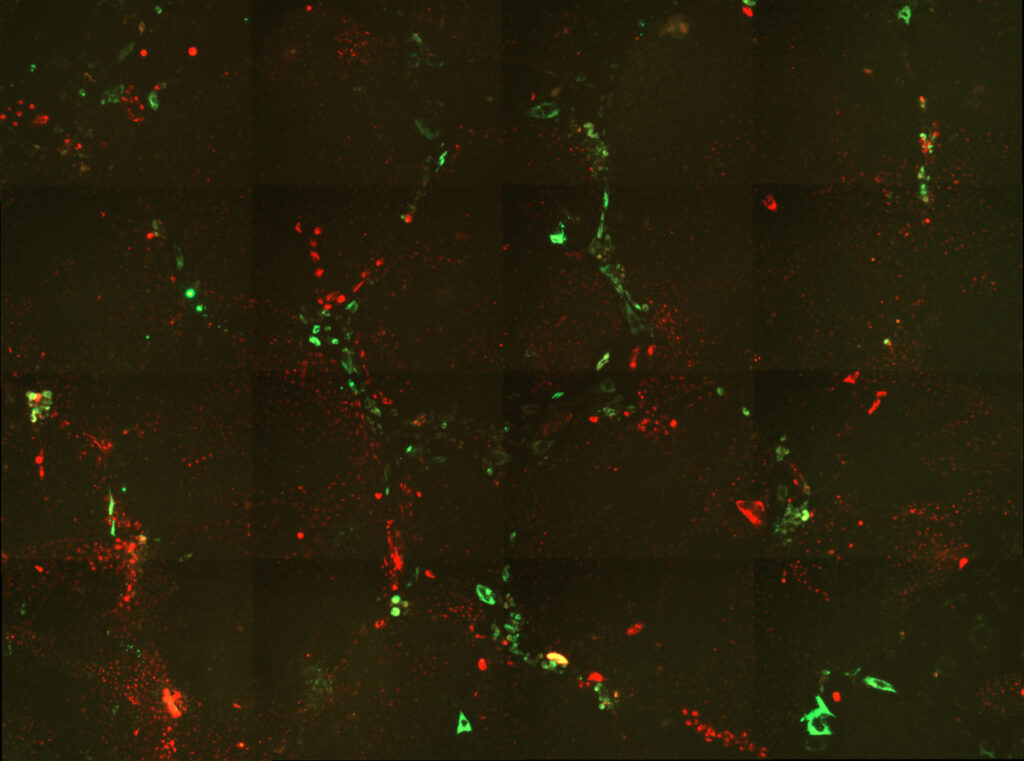
“We have several different skin models. In brief, one of the models consists of two different cell types: keratinocytes and fibroblasts. In these models we can measure what happens inside the cells and how they communicate. The cells can be grown together or separately in a dish, only separated by a membrane. In addition, we have access to printed skin tissue,” Pedersen explains.
Once Nofima had established both the model and the analytical methods, it was a natural next step for the researchers to apply them to the study of psoriasis.
How the researchers worked
Tone‑Kari Østbye describes how she and Pedersen carried out the experiments:
“In this study, we wanted to determine whether cetoleic acid could influence psoriasis. We grew the two cell types in a growth medium and added the fatty acids omega‑11, EPA or DHA. When we saw that the cells had taken up the fatty acids, we stimulated them with signalling molecules called cytokines to mimic psoriasis. We then collected the cells at two different time points: one when we think there is acute inflammation, and one when we think the cells are in a healing phase,” she says.
“This approach allows us to assess whether the treatment seems to act early or later in the process,” she concludes.
What the researchers found
Omega‑11 appears to be important for how skin cells respond under psoriasis‑like conditions. The results show that omega‑11 reduces the levels of cytokines (the signalling molecules that drive psoriasis) and that this fatty acid dampens the immediate inflammation that arises in the cells. The researchers also found that the omega‑3 fatty acids EPA and DHA seemed to play a more important role at later stages of the cell response.
“A combination of omega‑11, which gives an early response in the cells, and omega‑3, which gives a later response, appears to have a beneficial effect against psoriasis‑like inflammation in our models,” says Østbye. She stresses that the research has not yet been tested in people.
The researchers still know little about the mechanisms that make omega‑11 influence the course of the disease. However, they see that when they add omega‑11, the cells regain functions that resemble those of more normal, healthy cells.
Proceeding with caution
Østbye emphasises that they have not carried out studies in which people with psoriasis have changed their diet or taken specific fatty acids to test the effect. Human studies will be needed to confirm whether the findings also apply to patients with mild to moderate psoriasis.
“Using cells is an important first step toward obtaining meaningful insights,” says Østbye. She believes that cell models – cells grown in culture – are excellent tools for sharpening scientific knowledge, and that they can help reduce the need for animal experiments.

Nofima has many different types of cells that are used in research. For human skin, the institute has several cell models, and for salmon they have cell models for tissues such as fat, liver, muscle, heart and skin.
Value for the seafood sector
The project is funded by FHF – the Norwegian Seafood Research Fund. Lars Lovund, head of section for pelagic industry and aquaculture, sees clear value for the seafood sector.
“Marine oils from herring and mackerel in the North Atlantic contain relatively large amounts of cetoleic acid. This fatty acid is showing major positive health effects in the studies. It is important to highlight this, both for public health and to show the value of these fish resources,” says Lovund.
About the research
- The project Keto4cells is funded by FHF – the Norwegian Seafood Research Fund.
- The main aim of the project is to understand how cetoleic acid may be linked to reduced development of psoriasis, using in vitro cell models.
- The project is carried out by Nofima in collaboration with Queen Mary University of London.
- The research builds on results from a project funded by the Research Council of Norway and a scientific publication from that work.
- Find out more on the project webpage:
Publication
Read the final report (Summary in English on page 6)
Contact

Files and Links