A lot needs to be in place to recycle food packaging
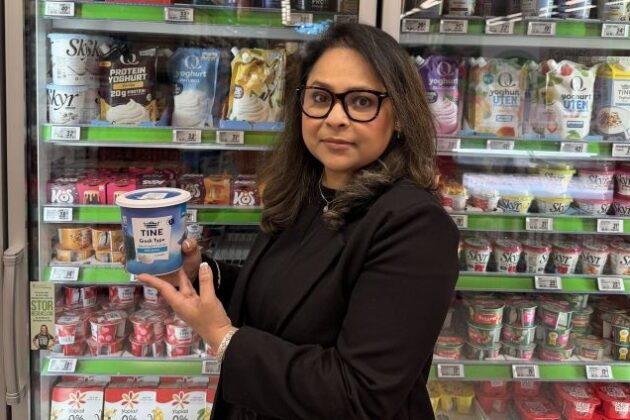
The yoghurt cup in the fridge should be able to be used for food packaging again, but then sorting, washing, design and regulations must work together. An overview from Nofima and Norner shows what is missing, and what the industry can do already now to be more successful with recycling.
In brief
- From 2030, plastic food packaging, excluding PET, must contain at least 10 percent recycled plastic. The requirement will rise to 25 percent in 2040
- The sorting facilities in the EU cannot currently distinguish food packaging from other packaging.
- Mild washing leaves food residue behind. Then the plastic cannot be reused for food.
- Packaging made from a single type of plastic is easier to recycle. With the right design, such plastics can replace conventional packaging made from multiple materials.
The yoghurt cup that won’t be a new cup
Back to the yogurt cup. You rinse it and throw it in the plastic waste. Today, the plastic most often turns into park benches, garbage bags or pallets, not new food cups. In addition, the UN Environment Programme estimates that about 85 percent of plastic for packaging ends up in landfills or as waste without control. The figure applies to the whole world.
“The plastic is not bad, but several factors prevent recycling into food packaging. Current sorting facilities in the EU cannot effectively separate food-contact plastic packaging from non-food-contact plastic packaging. Labels, glue and several layers in the packaging make sorting more difficult. The plastic must also be cleaned so well that it is as safe as virgin plastic, that is plastic made from materials that have never been used or recycled,” points out Nofima scientist Nusrat Sharmin. She has led the study.
Washing is an important part of this. Most European recycling plants wash PP mildly, without soap and harsh chemicals. Mild washing can leave food residues in the recycling stream, making the recycled plastic unsuitable for food-contact use unless adequate decontamination and regulatory requirements are met. Odours often receive little attention. A study of plastic bottles showed that detergent removed 20 to 30 per cent more odours from polyolefins than lye. The choice of detergent mattered more than the temperature. The solvent ethyl acetate removed 81 to 83 per cent of the odours in PP bottles.
Plastic and design choices affect recycling
Polyolefins are a group of plastics, often abbreviated as PO. Polyethylene (PE) and polypropylene (PP) belong to this group. Both are common in food packaging. They are lightweight, resistant to grease and protect well against moisture.
“We have mapped the packaging in Norwegian groceries. Of 580 foods, 261 had at least one part of PP. Cups, cans and bowls were most common, followed by lids. Dairy products accounted for 32 percent of the cups and cans. Ready-made desserts accounted for 14 percent, and cold cuts 11 percent. The volume is large enough that recycling has a lot to say,” says Sharmin.
Cups and lids are often made of the same type of plastic, preferably PP. Sorting is easier when the packaging consists of few types of plastic. Packaging with several layers, glue, printing and different types of plastic is difficult to sort. Therefore, the choice of plastic and the choice of design have a lot to say for recycling.
“Packaging made of one type of plastic can be of just as good quality as multi-layer packaging for several foods. But it is not suitable for everything, so manufacturers must test it for each individual product,” explains Senior Scientist Marit Kvalvåg Pettersen at Nofima. She is leading the Green Platform project Re3-Plast, where the study was conducted.
Industry tools and regulations
The rules and tools are closely linked. The EU requires that all packaging must be recyclable from 2030. The industry tool RecyClass provides design-for-recycling guidelines and evaluation protocols that help manufacturers assess how compatible their packaging is with existing collection, sorting and recycling streams.
It uses a traffic light that shows how well the packaging fits with recycling. Green means that it fits well, orange that it fits partially, and red that it fits poorly.
Recycled plastic that is to be used for food meets strict requirements. The EU requires that the plastic comes from an approved process. The process must remove pollution, and the entire chain must be traceable. The plastic must be as safe as virgin plastic.
There are numerous grades of plastic
Here are the main categories most common in Norwegian households, all of which are approved for use as food packaging.
- Polypropylene is abbreviated PP. It can be made in both flexible and rigid variants, and it can withstand high temperatures. It is often used for bottles and for packaging of fresh meat and ready meals that are to be heated in the microwave. Flexible variants are widely used for vegetables.
- Polyethylene is abbreviated PE and comes in many different variants, from very soft to completely rigid. PE can be used for everything from plastic film (bread bags, carrier bags) to bottles and bowls/cups.
- Polystyrene is abbreviated PS. It is crystal clear, rigid and relatively brittle, and its melting point is relatively low. Disposable drinking cups are often made of PS. PS is also commonly used for dairy products such as yoghurt.
- Polyethylene terephthalate is abbreviated PET. It is strong, rigid and easy to recycle. Plastic bottles for soft drinks and water are usually made of PET.
Many of the same products can be made from several of the plastic types. What determines which type the manufacturers choose is what the plastic is to be used for, how long it needs to last, and whether it has to withstand wear..
Scientific Method
- The article is a review study. The researchers collected and assessed previous research, regulations and industry figures on how polyolefins are used, washed and recycled. This provides a broad picture and shows where knowledge is lacking. The study has no new measurement data.
- The figures from the grocery survey are from 2022. The researchers registered the packaging of 580 food products in Norway’s largest grocery chain. They chose PP because PP is so common in the market, and because Norwegian figures for polyolefins were lacking.
About the research
The research has been carried out in the projects Recy-Food-Pack and Re3-Plast. Find out more about them here:
Funding
The Research Council of Norway has funded both projects. Re3-Plast is a Green Platform project and also has support from Innovation Norway and SIVA.