
FLO-biosec
Solutions for water intake, water treatment and biosecurity in FLO
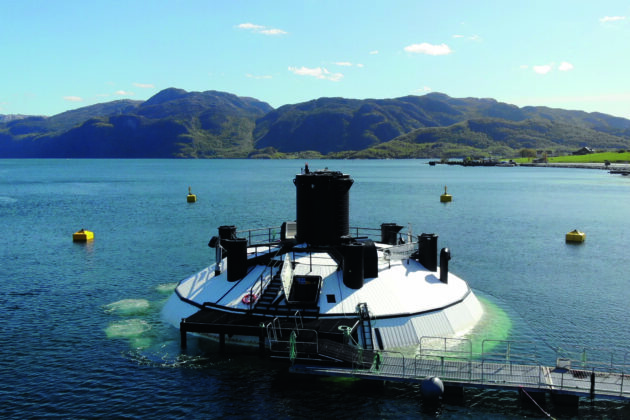
The overall goal of the project is to develop knowledge that is important for the further development of floating closed‑containment (FLO) systems for salmonid aquaculture in Norway.
Start
02. Feb 2026
End
31. Jan 2028
Funded by
FHF - Norwegian Seafood Research Fund
Cooperation
Partners: NIVA (Norwegian Institute for Water Research), the Norwegian Veterinary Institute, SINTEF Ocean, and Blue Planet. Resource group: Akvafuture, Akvatech, FiiZK, FishGlobe, Lerøy, Norwegian Greentech, Preline, and ScaleAQ.
Project Manager(s):
Other Participants:
Katrine Eriksen
Carlo C. Lazado
Ferosekhan Shajahan
Lill Heidi Johansen
Background
Floating closed aquaculture systems (FLO) are a key technology for sustainable growth in the aquaculture industry and for reducing spatial conflicts. FLO physically separates the fish from the surrounding environment by using sealed or semi‑sealed walls and active pumping of water, often from deeper layers (20–50 m) to avoid salmon lice. Several concepts have been developed for post‑smolt and grow‑out production, and experience shows good biological and environmental results, including zero lice in some facilities.
FLO also enables water treatment that can reduce the risk of introducing pathogens and other harmful organisms. Deep water intake prevents lice infection but can also reduce the risk of stress and mortality during blooms of jellyfish and harmful algae (HABs). More advanced disinfection methods, such as UV, may be necessary to prevent the introduction of viruses or bacteria.
There is no common standard for FLO design or water treatment. The knowledge base regarding pathogen distribution, the effectiveness of different treatments, and possible environmental consequences is limited. FLO can significantly reduce the spread of lice, but the effects on pathogen dynamics and infection risk between facilities remain unclear.
FLObiosec is one of four FHF‑funded projects aimed at increasing knowledge about floating closed‑containment aquaculture at sea. Together, FLObiosec, FLOslam, FLOprod, and FLOpilot will provide a major boost in the form of research‑based knowledge on floating closed‑containment aquaculture at sea.
Goal
The main goal is to map current solutions for water intake and water treatment in FLO, and how they contribute to managing the risk of introduction and establishment of pathogens, disease outbreak and further spread of pathogens.
What we do
FLObiosec will review available data, conduct industry surveys and in-depth case studies. These results will then be used to initiate a dialogue between stakeholders and authorities, to discuss findings, define knowledge gaps and barriers to implementation of biosecurity measures in FLO. This is crucial for ensuring fish welfare, reducing disease outbreaks, and minimizing environmental impact when scaling up the technology.
Contact

Files and Links