
Many food products have room for prolonged shelf life
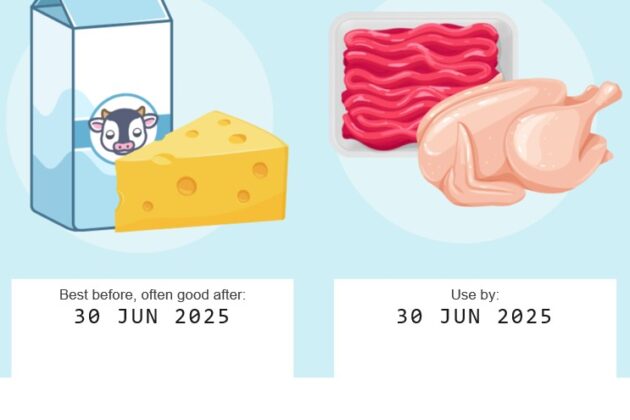
Norwegian food manufacturers often set shorter shelf lives than necessary. The reason is uncertainty about regulations and storage temperatures. Clearer guidance could improve resource utilization and prevent food waste.
In brief
- Food safety carries the most weight, but sensory quality, namely taste, smell and appearance, often determines the exact date. This applies regardless of whether the product is labelled “use by” or “best before”.
- Unclear microbial limits and a need for improved sensory methods create uncertainty. Combined with uncertain temperatures during transport and in shops, this leads several companies to set shorter dates than necessary.
- The regulations likely allow more flexibility than manufacturers currently use. More concrete guidance could give manufacturers greater confidence when determining shelf life.
In a study, scientists examined how Norwegian food manufacturers set shelf-life dates on chilled products. The study was commissioned by Matvett and led by Nofima. Nibio contributed as well.
The findings show that the regulations can offer more flexibility than manufacturers currently use. Clearer guidance, more reliable sensory methods and clearer microbial limits could give manufacturers the confidence to use the flexibility the regulations allow. This would enable manufacturers to extend the shelf-life date where it is scientifically justified.
Adding extra safety margins
“Our study shows that food safety always sets the outer limit, but manufacturers’ assessment of taste, smell and appearance often determines the final shelf-life date. As many as 87 per cent of the companies cited sensory quality as an important factor for the length of shelf life on products labelled use by,” says Senior Scientist Anlaug Ådland Hansen at Nofima, who led the study.
She adds that manufacturers are often uncertain about factors beyond their own control, such as the temperature on the shop shelves or the quality of incoming raw materials. Together with a need for more reliable methods, this lead to date labelling being set shorter than necessary.
For use-by products with a shelf life of 10 to 30 days, most manufacturers reported an extra safety buffer of one to three days. For best-before products, the buffer was often longer still, up to seven days or more. This extra margin is precisely what can turn perfectly safe food into food waste.
Calling for more practical guidance
The report shows that the flexibility within the regulations is not fully utilized. Shelf-life determination is rarely used today as a dedicated measure against food waste. Compared with Sweden and Denmark, the written guidance from Norwegian authorities is less specific and less comprehensive. Manufacturers are calling for better decision support when determining shelf life and choosing between best before and use by.
“More consolidated, practical guidance could give manufacturers the confidence they need to make better use of the flexibility available. We now want to move forward and find out exactly how much food could be saved. That requires standardized methods, clear limits and better decision support for manufacturers. The aim is to translate these findings into concrete, measurable cuts in food waste,” Hansen concludes.
Scientific method
- The study combines a survey, qualitative in-depth interviews and a comparison of official guidance in Norway, Sweden and Denmark.
- The scientists sent an online survey to 36 Norwegian food manufacturers. Eleven of these were later followed up with digital in-depth interviews. The interviews were recorded and analysed using thematic analysis. The scientists compared written guidance from the Norwegian Food Safety Authority with guidance from the Swedish and Danish authorities. They supplemented this with brief conversations with staff at all three agencies.
- The scientists chose this combination because the survey reveals the scale of the challenge, while the interviews explain why manufacturers act as they do.
- The method provides good insight into practices and attitudes within the industry, but it is not suited to quantifying exactly how much food could actually be saved. The project is also a preliminary study with a limited number of participants. The results therefore indicate a direction rather than a complete picture of the Norwegian food industry.
About the research
The report is part of the preliminary project FastHold, “Determination of shelf life and its significance for food waste”, funded by the Foundation for Research Levy on Agricultural Products (FFL/JA).
The project ran from January 2025 to June 2026. In addition to Nofima, NIBIO and Matvett took part in the work. The reference group consisted of the Norwegian Food Safety Authority and NHO Mat og Drikke (Food Drink Norway).
Research report
Contact

Research areas
Shelf life and food safety
Topics
Food waste