
Food texture shapes what and how much you eat
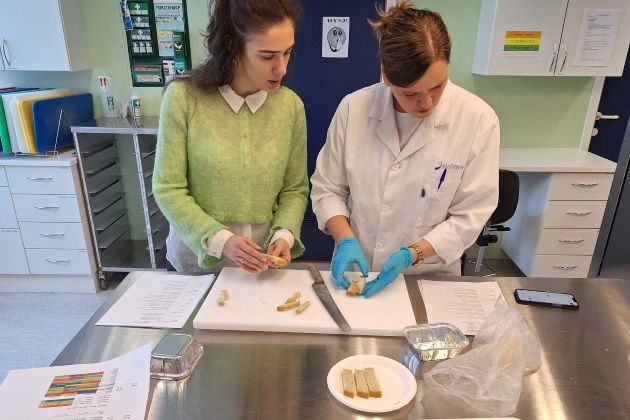
Nofima research shows that people who prefer soft and uniform foods tend to report a higher intake of ultra-processed products. Those consumers let texture and appearance as well as their surroundings to influence portion size more than following their internal feelings of hunger.
In brief
- Consumers who prefer soft and smooth textures eat more ultra-processed foods and let external cues as food appearence and social context influence portion size more than satiety cues.
- The scientists identified two similarly sized groups of consumers: “Texture picky” consumers, who prefer soft foods and homogeneous textures and rely more on external cues, and “Texture explorers” consumers, who enjoy more varied and complex textures and listen more to their own satiety signals.
- Studies using real food samples show that texture also shapes satiety expectations. Chewier and denser breads lead to more bites, longer chewing period and higher perceived satiety.
Scientists at Nofima have demonstrated that food texture plays an important role not only in how much people eat, but also in which products they choose.
In her doctoral work at Nofima, PhD candidate Katerina Katsikari has shown that food texture influences food preferences and expectations of satiety, and that individuals who prefer smoother textures may also report a higher amount of ultra-processed food consumed.
“I started with an online survey where 500 consumers answered questions about eating habits, food choices and the type of texture they prefer. Then, to complement this and to better understand what people actually do, not only what they say, I carried out studies using real food samples. In these studies, participants completed texture-related questionnaires, underwent tactile sensitivity tests, examined their chewing behaviour, and evaluated bread and yoghurt samples that differed in texture and processing level. This allowed us to compare what people say about texture with how they actually perceive it, process and respond to texture,” explains Katerina Katsikari.
Consumers split into two distinct texture preference groups
Participants in all studies conducted during this PhD fell into two main groups of roughly equal size. Some prefer foods with a soft and smooth texture, and texture is an important factor when they choose what to eat. How much they eat is driven more by how good the food tastes and how much others around them are eating rather than by how full they feel.
“We call this group ‘texture picky’, and we see that they tend to choose more ultra-processed foods and are more restricted in their choices. The other group, who prefer more varied and complex textures, we refer to as ‘texture explorers’. They consume less ultra-processed food, like more diverse foods and pay more attention to their own hunger and satiety signals,” says senior scientist Paula Varela-Tomasco at Nofima. She has led the work and is the main supervisor for Katerina Katsikari.
Chewier bread requires more bites and increases satiety
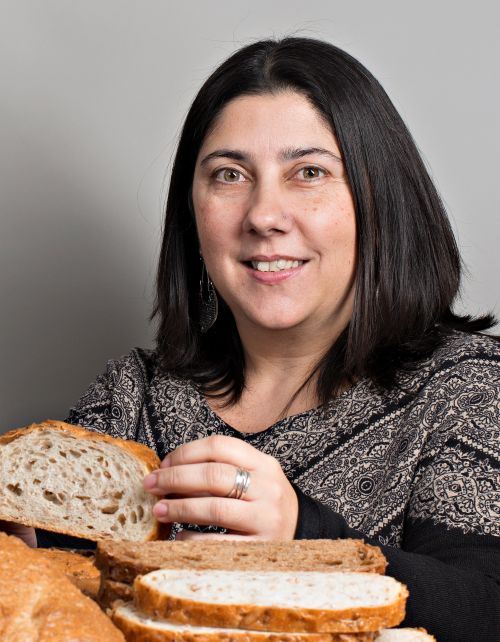
In a methodological study, the scientists began in Nofima’s bakery, where they developed four breads with different textures. The breads were made using the same ingredients and a wholegrain content of 50 per cent, corresponding to level two to three on the bread scale. To create variation in texture, they adjusted processing parameters such as kneading and proofing.
Sensory assessors at Nofima tested and evaluated the breads, after which the researchers conducted a consumer study. Cameras recorded how many chews each participant took and how long they chewed each bread.
“Throughout the evaluation, the trained sensory assessors describe which flavour and texture dominate as they chew, while the FaceReader software analyses the videos and calculates how many bites they take and how long they chew. This gives us both the perceived experience and the actual behaviour of the assessors,” says Katsikari.
Consumers who tasted the the breads with different textures perceived the bread with a chewy, dense texture as the most satiating. This bread also showed a longer chewing period and a higher number of chewing motions when measured with video‑based tools.
“These findings show that specific textural properties of bread can reduce the risk of overeating. Food producers can use this insight to increase the satiety impact of their products by adding more variation in texture. In baked goods, for example, bakeries can add seeds, make the dough denser by using wholegrains or retain a slightly chewier structure,” Varela points out.
The work also opens up opportunities to tailor products for different consumer groups. While people suffering obesity need more satiating food, on the contrary, older people who struggle with chewing and swallowing need softer foods with high nutritional value and may benefit from products where mouthfeel and satiety have been carefully designed.
Facts about the research
The PhD was funded by the Stiftelsen for Landbrukets Næringsmiddelforskning (SLNF). Research was done within the project “InnoSense”, funded by the Research Council of Norway and Norwegian Fund for Research Fees for Agricultural Products (FFL).
The title of the doctoral thesis is A multimethod exploration of texture perception, and its implications on preferences, satiety, and processed food consumption in different consumer segments.
Katerina Katsikari completed her PhD at the Faculty of Chemistry, Biotechnology and Food Science at NMBU. Main supervisor: Paula Varela-Tomasco, Nofima. Co-supervisors: Catrin E. Tyl, Associate Professor, Faculty of Chemistry, Biotechnology and Food Science, Norwegian University of Life Sciences, Ås, Norway. Hanne Hennig Havdal, Nutritionist, Orkla Foods, Oslo, Norway. Marte Gjeitung Byfuglien, Health and Nutrition Manager, Mills, Oslo, Norway.
Publications
Contact

Research facilities