
Helekorn
Norwegian bread wheat – utilization of the whole grain as a food resource
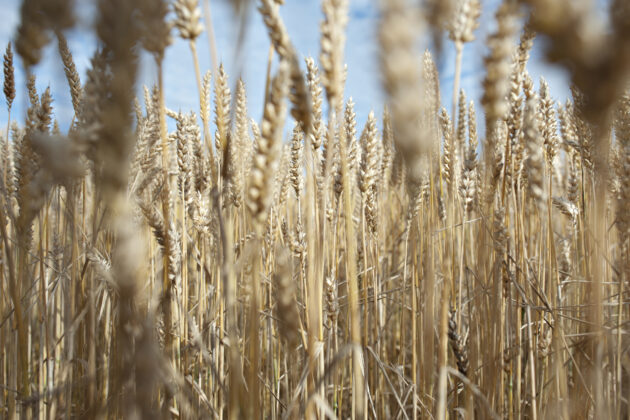
The project will identify key quality parameters of wholemeal flour made from Norwegian wheat and support industrial bakeries in producing wholegrain bread with consistent quality.
Start
01. Jan 2026
End
31. Mar 2027
Funded by
FFL/JA - Research Funding for Agriculture and the Food Industry
Project Manager(s):
Other Participants:
Background
Norwegian health authorities recommend a daily intake of at least 90 grams of whole grain. Increasing the consumption of wholegrain bread, particularly those with a high proportion of wholemeal flour, is a key strategy to meet this recommendation. Beyond its positive impact on public health, greater consumption of wholegrain products also improves the utilization of Norwegian wheat, as approximately 20%—primarily bran—is currently diverted to animal feed.
However, as the proportion of wholemeal flour in bread increases, its baking quality becomes a critical factor influencing product characteristics such as volume, shape, and texture. Compared to sifted flour, there is limited information available to bakeries regarding the baking performance of wholemeal wheat flour. Preliminary analyses indicate notable variations in viscoelastic properties between wholemeal and sifted flour, even when derived from the same grain sample. These variations tend to be more pronounced under unfavorable weather conditions during grain filling and maturation. Literature further supports that the baking quality of wheat is not necessarily consistent between sifted and wholemeal flour.
This unpredictability poses challenges for bakeries—particularly industrial bakeries—seeking to produce coarse baked goods with consistent quality. Increasing knowledge about the baking properties of wholemeal wheat flour and identifying key quality parameters will enable bakeries to optimize production processes and deliver high-quality products more efficiently.
Objective
The aim of the project is to increase knowledge about the baking quality of wholemeal wheat flour made from Norwegian wheat.
What we do
The project will focus on identifying key quality parameters—such as dough properties—that influence the baking performance of wholemeal wheat flour. To achieve this, three major wheat varieties with different gluten qualities, grown under varying environmental conditions during the 2025/26 season, will be sourced and milled into wholemeal flour for initial characterization of baking properties.
Subsequently, the study will examine how particle size affects baking quality in wholemeal flour with varying gluten strengths. Approximately 40 kg of wheat with strong gluten quality (e.g., class 1 or 2) and weak gluten quality (e.g., class 3) will be obtained. These samples will be milled into wholemeal flour with two distinct particle sizes—coarse and fine—and analyzed for baking performance. The flour samples will then undergo testing using different baking methods to assess the impact of particle size on dough and bread quality.
Contact

Topics
Cereals
Research facilities