
LetThereBeLight
Improved light regimes and feed for large smolt
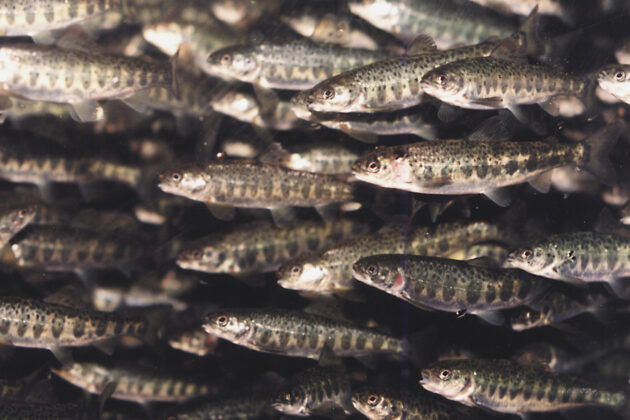
Smolt are often reared under continuous light and fed an energy-rich diet before being transferred to the sea. In this project, we aim to improve the light regime and feed to address challenges related to growth, sexual maturation, and fat accumulation in large smolt reared in closed aquaculture systems.
Start
01. Jan 2026
End
31. Dec 2026
Funded by
Nofima
Project Manager(s):
Background
Challenges associated with salmon production in open sea cages have led to a substantial shift in production strategies, with an increasing proportion of fish now produced as large smolts (250–1000 g) in land-based facilities. In such systems, relatively high water temperatures (10–14 °C), continuous light, and energy-dense diets are commonly used to maximize growth prior to sea transfer.
However, this strategy has produced variable outcomes. Producers report unstable growth, an increased incidence of undesirable sexual maturation, and poor performance both before and after sea transfer, raising concerns about whether current production regimes are sufficiently aligned with the biological requirements of salmon to ensure optimal performance and welfare.
Previous studies, including work conducted at Nofima (Duncan et al., 1999; Fraser et al., 2023; Skjold et al., 2024), have shown that reduced day length following smoltification leads to a substantial reduction in sexual maturation rates. In addition, diets with high protein and low lipid content have been shown to reduce gonadal growth under such light conditions (Skjold et al., 2025, in press).
However, these diets have not been optimized or fully tested under continuous light conditions, which are commonly used in commercial large-smolt production, and the isolated effects of diet composition under such conditions therefore remain unknown.
Both photoperiod and diet appear to have potential as strategic tools to mitigate the negative effects of sexual maturation – such as reduced growth, poor slaughter quality, and compromised welfare – but combined and systematic studies investigating the underlying mechanisms and interactions between these factors are lacking.
Objectives
The main focus is to optimize light regimes and feed composition to address challenges related to growth, sexual maturation, and undesirable fat accumulation.
What we do
Part 1 – Experiment
Small-scale experiments will be conducted in RAS tanks at Sunndalsøra using smoltified fish from 100 to 750 g. Fish will be exposed to the following treatments:
- Standard photoperiod and standard diet
- Standard photoperiod and high protein-to-lipid ratio diet
- Experimental photoperiod regime 1 and standard diet
- Experimental photoperiod regime 2 and standard diet
During the experiment, the degree of sexual maturation initiation, growth performance, and lipid status will be assessed.
Part 2 – Analyses
Analyses will include assessment of lipid status in muscle and visceral tissues, calculation of individual growth at the individual level, and sex determination at the end of the experiment. In addition, various hormone analyses and RNA sequencing will be performed.
