
AdHealth
Food Additives and Gut Health
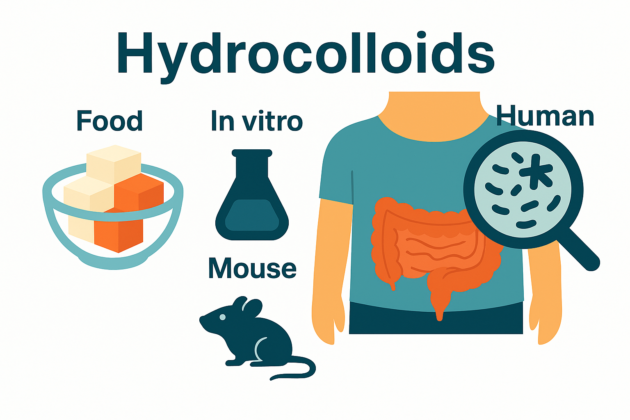
In AdHealth we study the impact of food additives (hydrocolloids) on the gut microbiota and health using in vitro models, mice trials and human intervention.
Start
01. Apr 2025
End
31. Mar 2028
Funded by
The Research Council of Norway
Cooperation
NMBU, UiO, Animalia, Grilstad, MILLS, Nortura and TINE
Project Manager(s):
Background
There has been growing public skepticism regarding the use of additives such as hydrocolloids in food. This stems from research suggesting that certain hydrocolloids may negatively affect the gut microbiota, with the potential to impact health adversely—although conflicting findings also exist.
The Norwegian food industry and research communities take these concerns seriously and are committed to supporting research that generates new knowledge to ensure the use of safe and healthy hydrocolloids in food.
Objective
The primary objective in AdHealth is to gain better knowledge on how commonly used food hydrocolloids are handled by gut bacteria and how this translates into beneficial or detrimental health effects in animal models and humans.
What we do
This is a collaborative project where researchers and industrial partners are involved throughout the project period.
Hydrocolloids and model food
Hydrocolloids commonly found in Norwegian food products will be the main focus. All partners will work together to identify the most relevant ones. The industry partners, in collaboration with Nofima, will develop model foods containing these hydrocolloids for further evaluation of protein digestion and gut microbiota. Food products will also be prepared for human intervention studies.
Digestion, fermentation and gut microbiota
The stability of the hydrocolloids during digestion and their potential effects on protein digestion in the model foods will be assessed using an in vitro digestion model at Nofima. Fermentability and gut microbiota effects of the hydrocolloids—both alone and as part of the model foods—will be studied using an in vitro colon model. This will be a joint effort between Nofima and NMBU.
Health effects in mice and humans
In vivo health evaluation of the hydrocolloids and the role of the gut microbiota will be conducted through mouse trials and human intervention studies led by NMBU.
Facts about hydrocolloids
Hydrocolloids are long-chained polymers, primarily polysaccharides, that can form viscous or jelly-like structures when mixed with water. They are both found naturally in many foods and added to provide the desired consistency and texture. This ability to bind water allows them to be used both as thickeners, stabilizers and emulsifiers. They can give food a stable consistency and better shelf life, improve mouthfeel and replace fat in light products.
The functional properties of hydrocolloids vary according to chemical structure and molecular size.
Common hydrocolloids in food are pectin (found in fruits and berries), starch (found in cereals and potatoes), gelatin (extracted from animal tissues), alginate (extracted from seaweed and kelp), guar gum (extracted from guar seed), xanthan gum and gellan gum (produced by bacterial fermentation) and carrageenan (extracted from red algae).
Contact

Research areas
Diet and health
Topics
Biotechnology
Similar projects