
Structure rediscovered in salmon lice
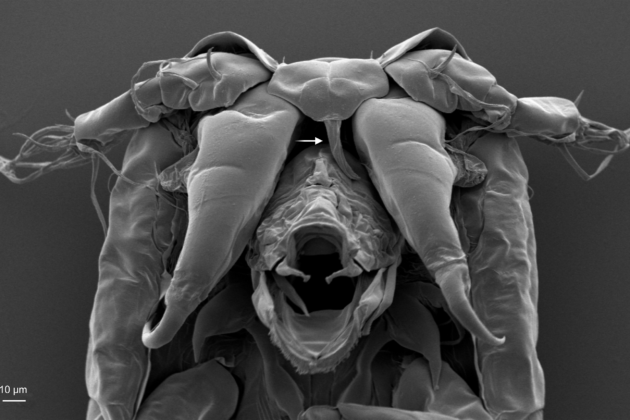
Amritha Johny at Nofima has described an overlooked structure at the very front of the salmon louse’s body. Resembling a small spike, it may play a role both in how the louse senses salmon and in its initial attachment to the fish’s skin.
Update: In an earlier version of this article, we stated that a previously unknown structure had been discovered in the salmon louse. It has now emerged that, despite thorough investigations before the article was published, the structure had in fact been discovered previously. The article has now been updated with the correct facts.
The structure has previously been mentioned briefly as filament duct in a scientific publication from 1991, with James Bron of the University of Stirling as the lead author: https://doi.org/10.1111/j.1469-7998.1991.tb04799.x
The structure, named the rostral spike, is visible at the stage when salmon lice need to find a host. The rediscovery could offer new opportunities to develop tools for controlling salmon lice.
Read the publication here:
The rostral spike was discovered while examining copepodids under the microscope. This is the free-swimming infective stage, when salmon lice actively seek out and infect a host.
Amritha Johny, a fish health researcher at Nofima, set out to study salmon louse behaviour. This would give her a better basis for investigating how the louse affects salmon health.
Johny used wild salmon lice collected from farmed salmon, as well as laboratory strains. Egg strings hatched and developed into copepodids in Nofima’s laboratory at Ås. The lice were initially screened by microscopy at Nofima, before samples underwent further analysis using electron microscopy at the NMBU Imaging Centre.
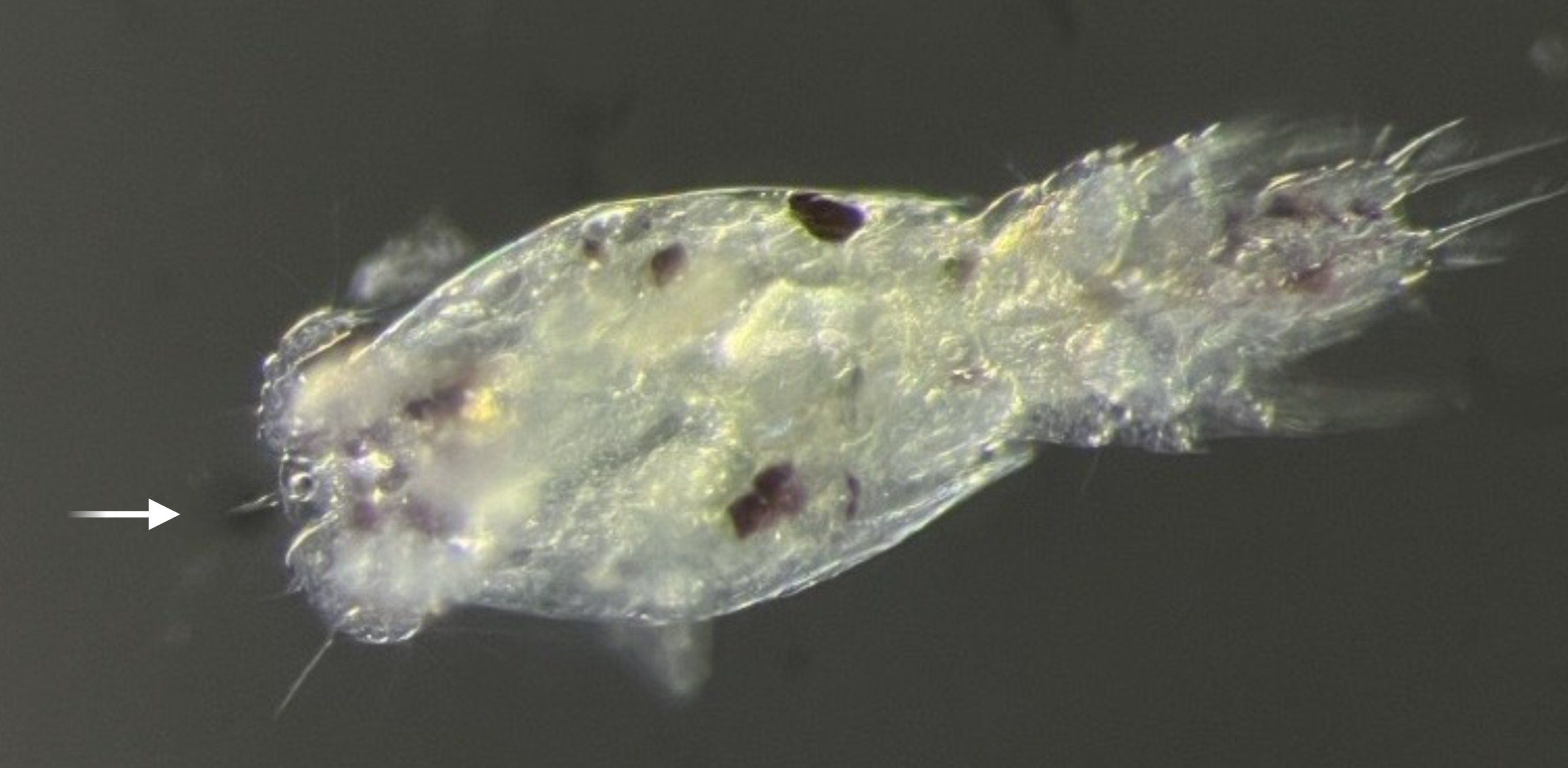
She observed that salmon lice spend considerable time sensing, probing and penetrating the skin. This small spike-like structure appeared to be highly active during that process.

“The fact that it moved made me curious, and I wanted to find out what it was,” says Johny, explaining how she became aware of the unknown structure.
She detected the rostral spike in every louse she examined under the microscope. She also consulted leading researchers in the field, who were not familiar with the structure.
It has now emerged that the structure has previously been mentioned in scientific literature.
What does the rostral spike do?
Microscopy showed that the structure is flexible and moves in coordination with the rest of the body. It can also be extended from, or retracted into, the body shell. The images further revealed a pore-like opening near the point where the spike attaches to the body.
“There are many “mysteries” to solve about how salmon lice find and interact with their host. Amritha Johny draws attention to an appendage on the lice that could play an important role, says senior researcher a Nofima, Nick Robinson. Robinson is leading a very large international research project “CrispResist” about discovering the mechanisms underlying cross-species variation in host resistance to sea lice.
“If the salmon louse’s ability to detect and infect a host depends on specialised structures such as this rostral spike, it may be possible to disrupt the process before the louse has time to attach to its host,” says Johny.
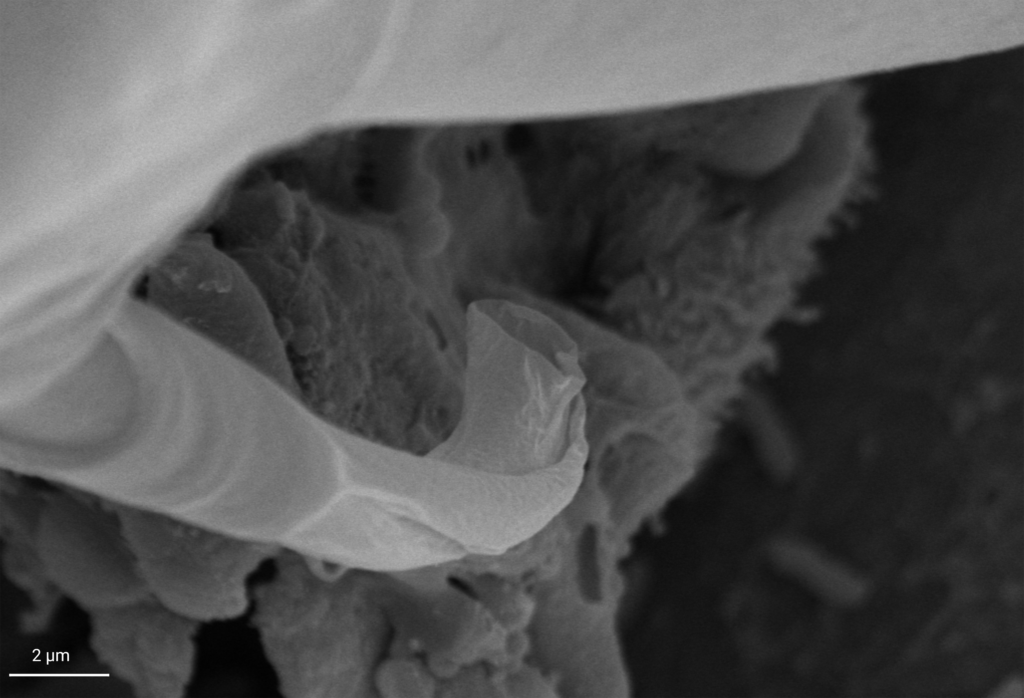
That could make it a more specific target for new salmon louse control measures. However, Johny stresses that further research is needed before scientists can establish exactly how the rostral spike functions. Among other questions, researchers need to investigate the structure in greater detail and determine its precise role.
Contact

Research areas
Farmed fish
Topics
Salmon lice